
Kajukenbo is an American hybrid martial art. It was founded in 1947 in the Palama Settlement on Oahu, Hawaii. In the late 1940s, the Palama Settlement was a violent area. Due to this environment, five martial artists from varying backgrounds came together with the goal of developing an art that would be practical and effective on the street, each with a different specialty, and its name (Kajukenbo) comes from the various arts from which its style is derived:
Peter Young Yil Choo — Tang Soo Do Korean KArate and Boxing
Joseph Holck — JUdo and Danzan Ryu JUjutsu
Adriano Directo Emperado — KENpo (Kosho Ryu) and Eskrima
Frank F. Ordonez — Danzan Ryu Jujutsu
Clarence Chang — Sil-Lum Pai Kung Fu (also known as Chinese BOxing)
Korean KArate
JUdo & Danzan Ryu JUjutsu
Danzan Ryu JUjutsu
Kosho Ryu KENpo
Sil Lum Pai, Chinese BOxing
In its conception, the founders followed a simple rule, if a technique worked consistently on the street (or against one another), then it stayed in the system, if it did not, it was discarded. This allowed the style to maintain its self-defense focus, while covering limitations found within each of their traditional arts.
Kajukenbo training incorporates a blend of striking, kicking, throwing, takedowns, joint locks and weapon disarmament.
Today, Kajukenbo is practiced all over the world in many different branches. In contrast to many traditional martial arts, students are not required to mimic their teacher, but are encouraged to develop their own “expression” of the art.
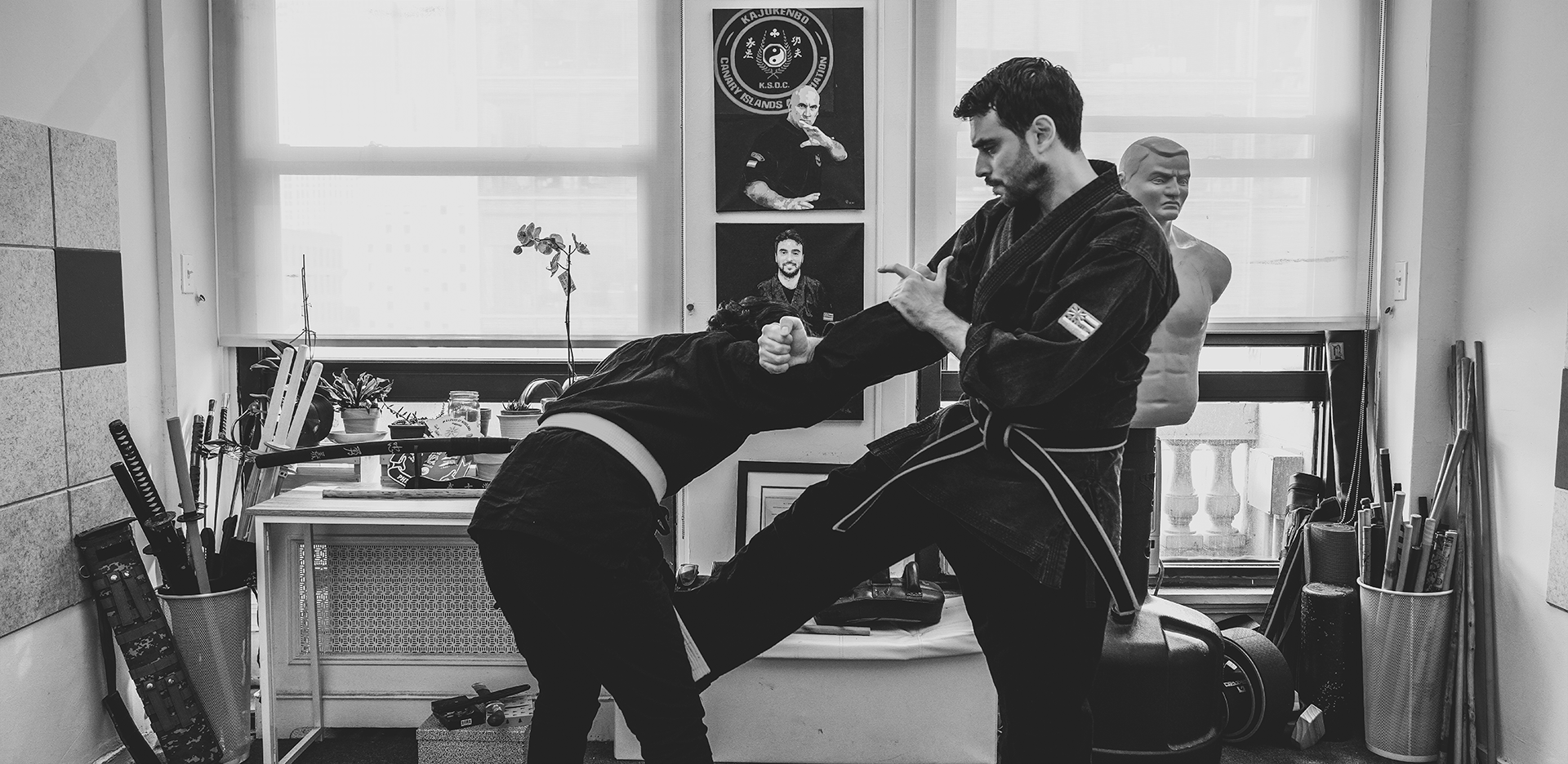
My name is Carlos Navarro and I started training martial arts when I was little. I practiced Aikido for several years. Later I got captivated by other forms of combat and I trained Full Contact, Kick Boxing and Thai Boxing.
For several years I trained Capoeira and gymnastics which helped me be more aware about body movement, and the importance of flexibility.
I started practicing Kajukenbo and Filipino Martial Arts in 1998 from my master Tomás Encinoso Armas, and I haven’t stopped since then. I try my best to keep learning from other masters and other martial arts to enrich my Kajukenbo. Two of the arts that have contributed to my growth greatly are Balintawak Arnis Cuentada and Doce Pares (World Concept).
I personally believe that there is no such thing as “better martial art” or “most effective method”. Each system can bring you benefits and can help you develop some skills. And to me that flexibility and constant curiosity to find what is useful is the true meaning of Kajukenbo.
I’m currently practicing in New York City. If you are curious or just want to practice with us you can email me at kajukenbonyc@gmail.com
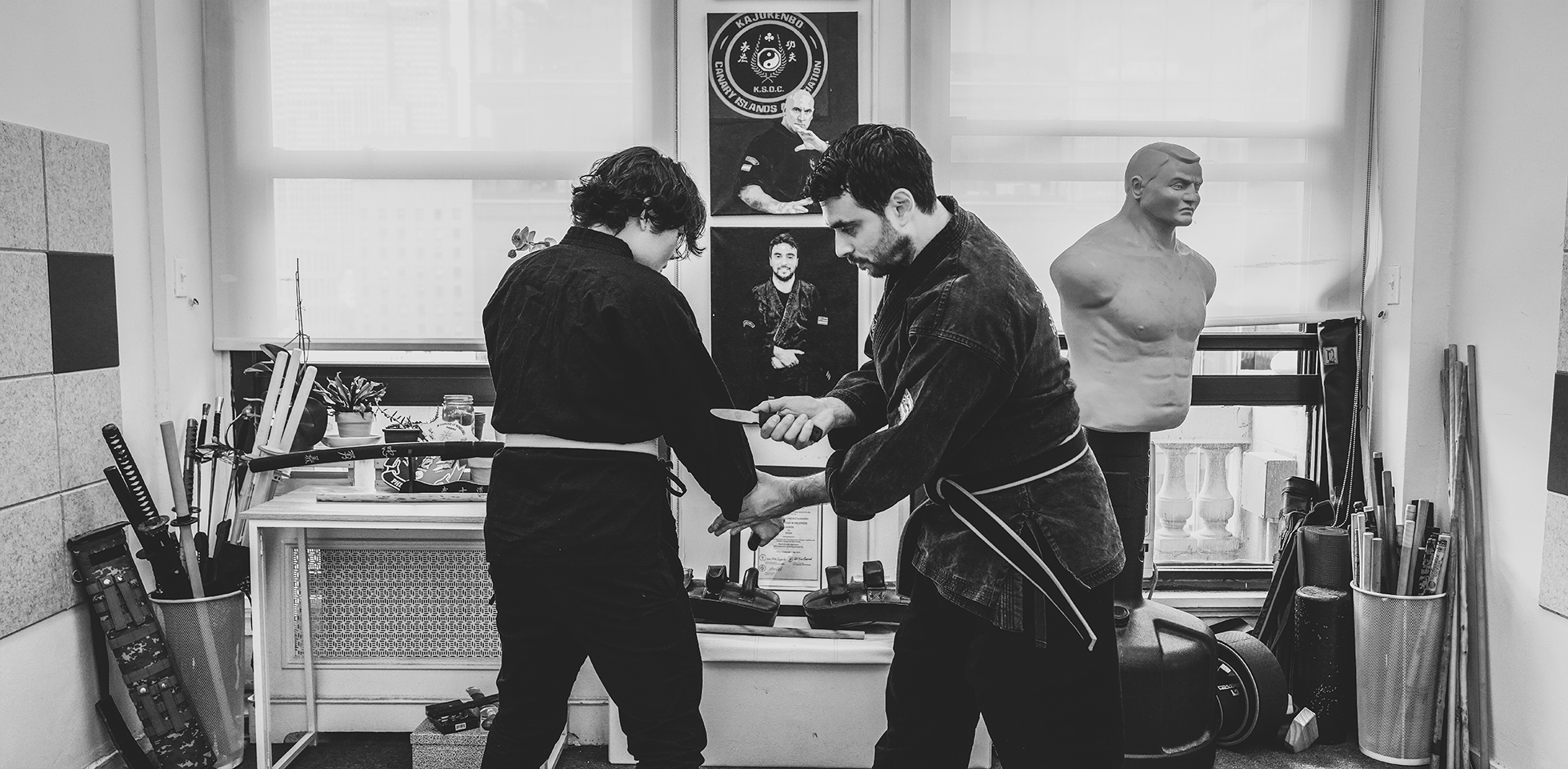
As a self defense system, kajukenbo not only focuses on empty hand concepts. We pay close attention to the use of weapons (sticks, knives, improvised weapons), always from a self defense point of view.
The following are a compilation of very short clips where I show some techniques. Most of them just reflect some moves. I hope you enjoy them!
Empty hands refers to any work where the defendant does not use any type of weapon (even if the attacker may use one) In Kajukenbo, the concept “empty hands” includes throws, punches, kicks, blocks, locks…
One of the key issues in Kajukenbo is to identify and distinguish the different distances you may find in a confrontation, as well as training coordination, timing…
Improvised Weapons is the use of everyday objects as self defense tools. Although it might help you develop more confidence in your techniques, a work of caution is needed. Improvised weapons are not a substitute for your training but a complement of it.
This is a very complicated but necessary part of any martial art training. In it we try to show the use of knife for self defense purposes. We also try to show the reality of different scenarios to make the student more mindful about the danger of having an altercation with a knife, whether the other person is carrying one or we are the ones carrying. It´s also important to have an understanding about what constitutes self defense from a legal point of view. We cannot stress this enough.
Keep in mind that some of this training is oriented to military personnel and law enforcement.