
This neuroscience-based self-defense program is a 12-week intensive designed for adults who want real, functional self-defense taught in a way that the brain actually retains. The program combines practical combat training with evidence-based principles from neuroscience, motor learning, and stress physiology to help students learn faster, respond more effectively under pressure, and retain skills long-term.
Each week builds progressively on the last, ensuring that techniques are not just learned, but encoded, reinforced, and applied in realistic scenarios. No prior martial arts experience is required.
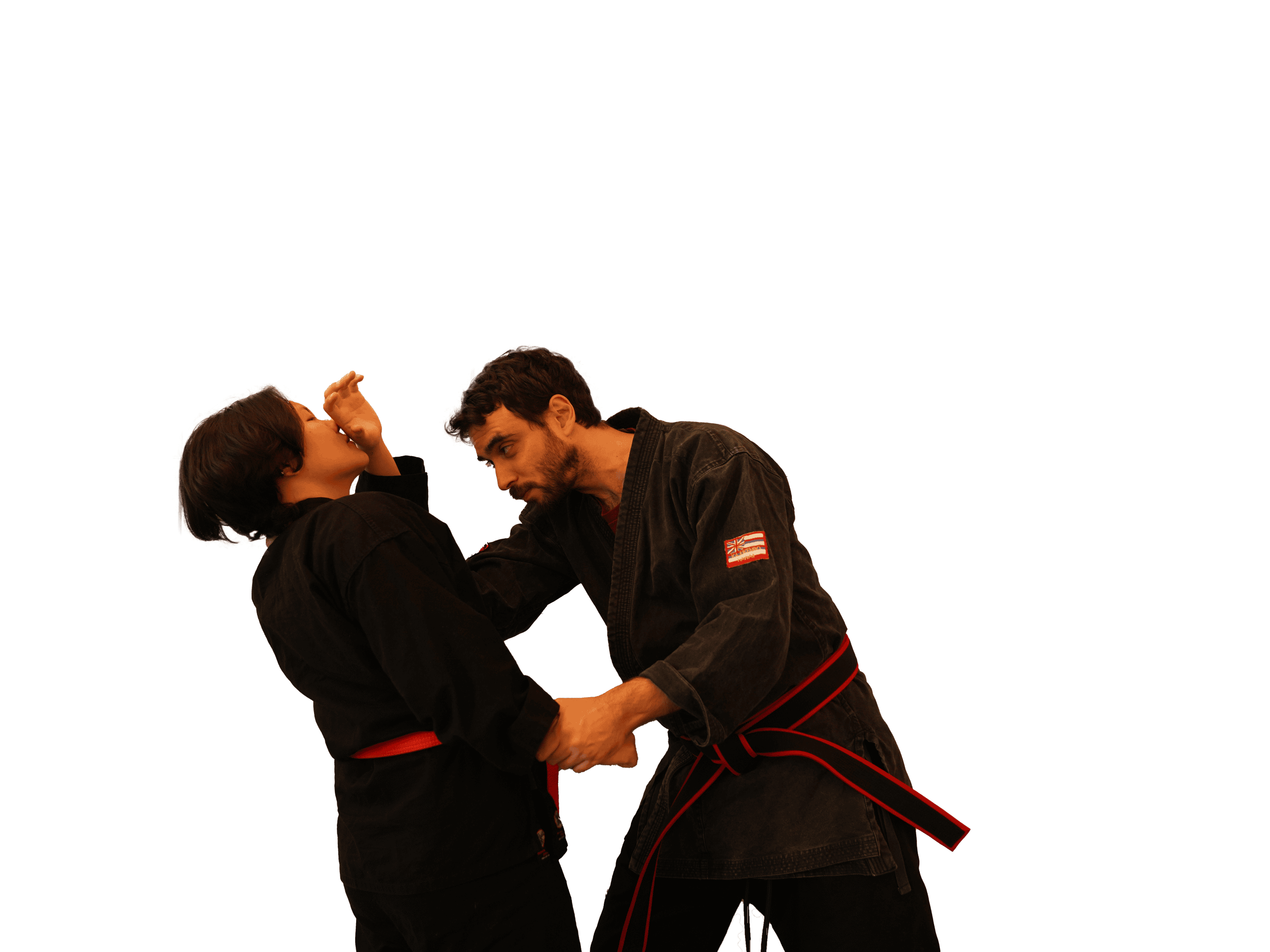
The curriculum is divided into three focused phases, each lasting four weeks:
Month 1 – Striking Fundamentals (Weeks 1–4)
Students learn foundational striking mechanics, balance, movement, and power generation. Emphasis is placed on simple, high-percentage techniques that can be performed reliably under stress.
Month 2 – Grappling & Close-Range Defense (Weeks 5–8)
Training shifts to clinch work, takedown defense, positional control, and escapes. Students learn how to manage distance, maintain balance, and respond instinctively in close-range situations.
Month 3 – Weapons Awareness & Defense (Weeks 9–12)
The final phase introduces knife awareness, threat recognition, evasive movement, and practical defensive responses. Training emphasizes speed, reflexes, memorization of movement, and decision-making under pressure.

This program is built around how adults actually learn movement skills.
Rather than relying on repetition alone, training integrates spaced repetition to improve long-term retention, stress-response exposure to improve performance under pressure, motor learning principles to accelerate skill acquisition, and data-driven feedback to guide individual progress.
The result is training that sticks even in high-stress real-world situations

Unlike traditional martial arts programs, progress in this course is measured, documented, and analyzed throughout the full 12 weeks.
Each student is assessed across eight physical and cognitive categories including mobility, flexibility, power and strength, coordination, speed, reflexes, memorization of movement, and balance. Progress is evaluated using a clear 0 to 5 scale that allows for precise tracking over time.
Assessments are conducted at four key points. Week 1 establishes a baseline. Week 4 evaluates progress in striking. Week 8 evaluates grappling development. Week 12 provides a final assessment covering weapons defense and overall performance.
This system allows instructors to establish a clear starting point, track neurological and physical adaptation, adjust training focus based on individual needs, and provide written feedback with objective progress markers. Half-point scoring is used when a student falls between levels, ensuring accuracy and transparency.
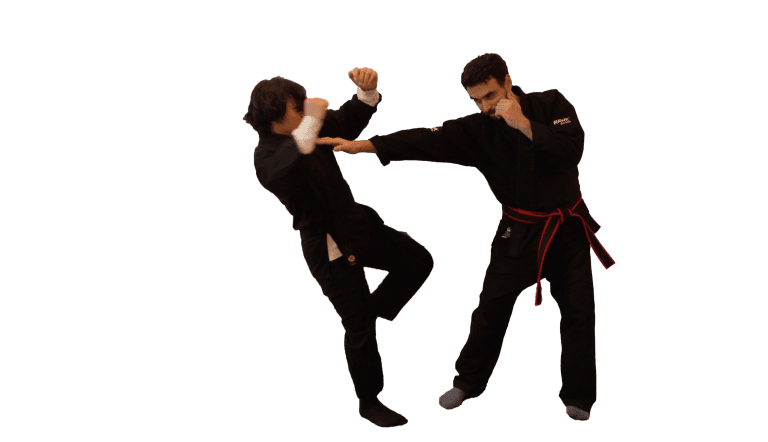
Each 90-minute session follows a structured format designed for optimal learning. Sessions begin with a warm-up and nervous system preparation, followed by technical instruction and demonstration. Students then move into guided practice with direct feedback, scenario-based application, and a review phase with brief assessment.
All sessions are recorded so students can reinforce learning outside the studio.
By the end of the 12 weeks, students are able to recognize threats earlier, respond more effectively under stress, and apply techniques confidently in realistic scenarios.
Most students demonstrate measurable improvement across both physical and cognitive categories, with the greatest gains typically seen in reflexes, coordination, and memorization as the nervous system adapts through structured training.
The program runs for 12 weeks with one 90-minute session per week. Training is available in one-on-one or semi-private formats with two to three participants. All training equipment is included, and no prior experience is required.
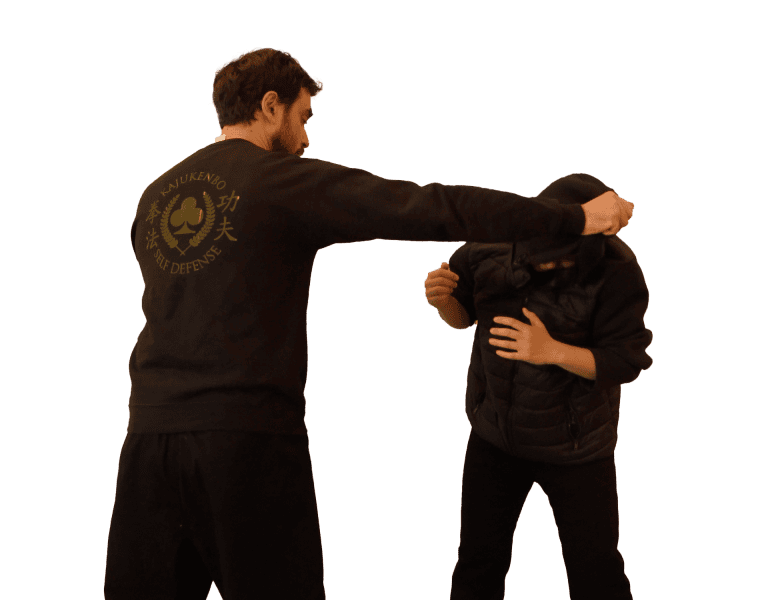
The program is led by Carlos Jimenez, who brings over three decades of martial arts experience combined with formal academic training in neuroscience.
He is a sixth-degree black belt in Kajukenbo, a fully qualified instructor of Balintawak, has trained Kajukenbo and Filipino Martial Arts since 1998 under Professor Tomás Encinoso. Carlos also holds a master’s degree in Neuroscience and Multiple Intelligences and he is very passionate about the Neuroscience of Learning.
Semi-private training with two to three participants is priced at 120 dollars per session, totaling 1,440 dollars for the full 12 weeks.
One-on-one private training is priced at 200 dollars per session, totaling 2,400 dollars for the full 12 weeks.
Contact us for your first free consultation at kajukenbonyc@gmail.com with the headline consultation
Kajukenbo and Filipino Martial Arts Club
501 5th Avenue, Suite 2002
New York, NY
kajukenbonyc@gmail.com
kajukenbonyc.com